Analysis of the Principle and Usage Method of Denso Diesel Pumps in Japan
I. Core Working Principle: Precise control of high-pressure common rail technology
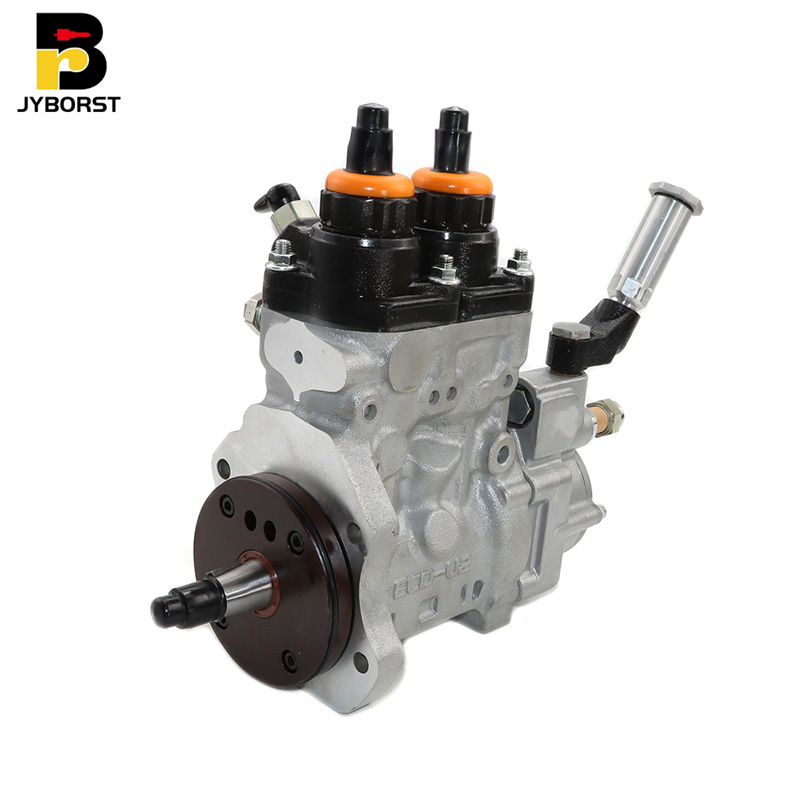
Denso diesel pumps in Japan take the high-pressure common rail system as the core and achieve precise control of fuel injection through the coordinated action of solenoid valves and hydraulic pistons. Its principle can be divided into the following stages:
Fuel pressurization and storage
The high-pressure oil pump pressurizes the fuel to over 100MPa and delivers it to the common rail pipe for storage. The high-pressure sensor on the common rail pipe monitors the pressure in real time and feeds the signal back to the ECU (Electronic Control Unit).
The ECU calculates the target pressure based on the engine operating conditions (such as speed and load), and stabilizes the common rail pressure at the set value by adjusting the control valve on the oil pump.
Fuel injector solenoid valve control
When the solenoid valve is in a power-off state: The oil inlet of the three-way valve is open and the oil outlet is closed. The fuel in the common rail enters the fuel injector and simultaneously goes above the hydraulic piston. The hydraulic piston descends, pressing the needle valve and closing the fuel injector.
The energized state of the solenoid valve: The oil inlet of the three-way valve is closed and the oil drain is open. When the pressure above the hydraulic piston drops, the needle valve lifts under the pressure of the common rail, and the fuel is sprayed into the combustion chamber in a high-pressure mist form.
Fuel injection rate and fuel stop control
The formation of fuel injection rate: A check valve and a throttle hole are designed above the hydraulic piston to gradually reduce the oil pressure. The area of the piston is much larger than that of the needle valve, generating a strong hydraulic pressure to quickly close the needle valve and achieve rapid oil stoppage.
Injection timing and quantity control: The injection timing is determined by the energization time of the three-way valve, and the injection quantity is controlled by the energization duration. The ECU dynamically adjusts parameters based on sensor signals to optimize combustion efficiency.
Ii. Usage Method: Key Points of Standardized Operation and Maintenance
Preparations before startup
Fuel and engine oil inspection: Use No. 0 diesel and ensure the fuel tank is full. Add four-stroke diesel engine oil to the upper-middle position on the dipstick.
Cooling system inspection: Add cooling water to the expansion tank to 2/3 of its height to prevent the engine from overheating.
Pipeline connection: Connect the inlet and outlet water pipes and the gate valve, close the gate valve of the outlet water pipe, and ensure a seal without leakage.
Water priming operation: When starting for the first time, fill water into the pump body and the inlet pipe until water flows out of the pump body to achieve the self-priming function (no need to repeat water filling for subsequent starts).
Startup and Operation
Electric START: Connect the battery (positive terminal to positive terminal, negative terminal to negative terminal), insert the key and turn it to the "Start" position to start the engine. After the rotational speed stabilizes, gradually open the gate valve of the water outlet pipeline to the required working condition.
Manual start (standby) : If the battery is dead, use the pull plate to manually start it to ensure emergency use.
Operation monitoring: Observe the oil pressure gauge on the dashboard to ensure that the oil pressure is within the normal range (either too low or too high may indicate a fault).
Shutdown operation
Idle cooling: Before shutting down, set the engine to idle and let it run for a few minutes. Once the temperature drops, turn OFF the key to the "OFF" position.
Avoid thermal shock: Do not immediately shut down the engine to reduce thermal damage to the diesel pump and engine.
Daily maintenance
Filter replacement: Regularly replace the fuel filter to prevent impurities from entering the diesel pump.
Oil pipe inspection: Check whether the oil pipe connection is firm and if there is any leakage.
Environmental adaptability: Avoid long-term use in extreme environments such as high altitude, high temperature, and extreme cold to prevent performance degradation.
Professional maintenance: In case of fuel system failure, go to a professional repair shop for inspection in time. Do not disassemble the diesel pump by yourself.
Iii. Technical Advantages and Application Scenarios
Advantages
High-pressure injection (above 100MPa) enables more thorough atomization of fuel, increasing combustion efficiency by 10% to 15%.
The solenoid valve control enables multiple injections (pre-injection, main injection, and post-injection), reducing noise and emissions (NOx reduction by 20%-30%).
It has a fast response speed and can meet the demands of high-speed engines.
Application scenarios
Diesel engines for passenger cars and commercial vehicles (such as some models of Toyota and Honda).
Non-road mobile machinery such as construction machinery and agricultural machinery.
Fixed diesel-powered equipment such as ships and generator sets.

 Products
 CH
CH
 Tel:+86 15993101313
  Contact:Mr. Hu
 E-mail:gyboersite@163.com
 Alibaba:
 Wechat consultation
 tiktok
 +86 159 9310 1313