Although Delphi and Caterpillar common rail injectors belong to different technical systems, both achieve precise fuel injection with high-pressure common rail technology at their core. Their working principles can be elaborated from four aspects: structural composition, fuel pressure control, injector working mechanism, and technical advantages.
I. Structural Composition: The core component of the high-pressure common rail system
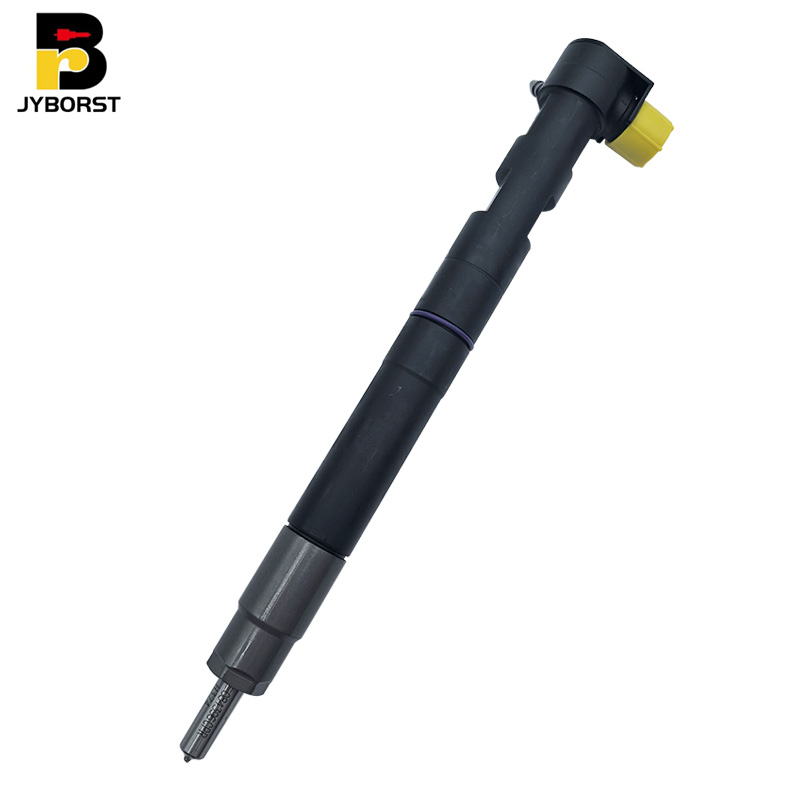
The common rail fuel injector is a key actuating component of the high-pressure common rail fuel injection system, mainly composed of the following parts:
High-pressure fuel pump: It pressurizes the fuel to 1600-2000 bar (up to 2600 bar in some systems), providing stable high-pressure fuel for the common rail pipe.
Common rail pipe: Stores high-pressure fuel and eliminates pressure fluctuations to ensure constant fuel pressure.
Fuel injector: Precisely controls the fuel injection time, volume and pressure according to the instructions of the ECU.
Electronic Control Unit (ECU) : It monitors the engine operating conditions (speed, load, temperature, etc.) in real time through sensors, calculates the optimal fuel injection parameters and controls the operation of the fuel injectors.
Ii. Fuel Pressure Control: Constant pressure supply independent of engine speed
The core advantage of the common rail system lies in separating the generation of fuel pressure from the injection process:
Independent pressure regulation: The pressure generated by the high-pressure oil pump is controlled by an electromagnetic pressure regulating valve, which is independent of the engine speed and can be freely set within the range of 200 to 2000 bar.
Pressure stabilization mechanism: The pressure sensor on the common rail pipe monitors the oil pressure in real time and feeds the signal back to the ECU. The ECU maintains a constant pressure in the common rail by regulating the driving current of the solenoid valve and controlling the amount of fuel entering the high-pressure pump.
Iii. Working Mechanism of Fuel Injectors: Precise injection driven by solenoid valves
Taking the Delphi hydraulic service injector as an example, its working process is divided into four stages:
Closing stage: When the solenoid valve is not powered on, the sealing conical surface of the armature assembly seals the oil outlet channel under the action of the spring force. The fuel pressure in control chamber A is the same as that in the oil tank B, but the force-bearing area on the end face of the needle valve is larger. The resultant force moves downward, causing the needle valve to sit down and the spray hole to close.
The initial power-on stage: After the solenoid valve is powered on, it generates an upward electromagnetic force, attracting the armature assembly to rise. The high-pressure fuel in control chamber A is rapidly returned through the seat holes, and the pressure drops sharply. The fuel in the oil tank B still maintains rail pressure, and the resultant force turns upward.
Injection stage: The needle valve is lifted by oil pressure, and high-pressure fuel is atomized through the injection holes and injected into the combustion chamber. The Delphi DFI2 injector reduces the hydraulic transmission time by shortening the valve stem design. The hydraulic delay is less than that of similar products, and the response speed is faster.
Stop injection: After the solenoid valve is de-energized, the electromagnetic force disappears, and the armature assembly reseals the oil outlet channel under the action of the spring force. The oil pressure in control chamber A quickly returns to the rail pressure, the needle valve closes, and the oil injection stops.
The special mechanism of Carter's medium-pressure common rail system:
The injection pressure is increased by using a booster piston: There are two oil passages inside the engine. The medium-pressure oil passage (10-28 MPa, with engine oil as the medium) pushes the booster piston downward, compressing the fuel and raising the pressure to 160 MPa.
The control logic of the solenoid valve: When powered on, the lift valve rises, cutting off the return oil hole, and the engine oil enters the upper part of the piston to push the plunger and compress the fuel. When the power is cut off, the lift valve descends, the oil return passage is connected, the boost piston returns to its original position, and the oil injection stops.
Iv. Technical Advantages: Guarantee of efficient combustion and low emissions
Stable and adjustable injection pressure: High-pressure injection enables more thorough atomization of fuel and more uniform mixing with air, thereby enhancing combustion efficiency.
Electronic control is flexible and precise: The ECU can achieve multiple injections (such as pre-injection, main injection, and post-injection) according to the working conditions, optimizing the combustion process and reducing noise and emissions.
Fast response speed: The Delphi DFI2 injector has a small hydraulic delay, and the Caterpillar system responds quickly through the supercharged piston, both of which can meet the requirements of high-speed engines.
Strong durability: The components of the high-pressure common rail system have high precision (the gap between pairs is 1.5-3.7 microns), and it has strict requirements for the cleanliness of diesel. However, long-term use can reduce engine wear.

 Products
 CH
CH
 Tel:+86 15993101313
  Contact:Mr. Hu
 E-mail:gyboersite@163.com
 Alibaba:
 Wechat consultation
 tiktok
 +86 159 9310 1313